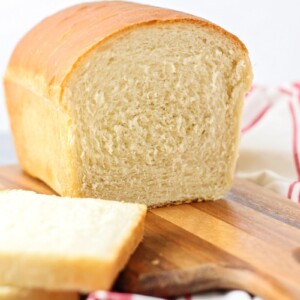
Easy Homemade Bread Recipe
This BEST homemade bread recipe makes the most deliciously fluffy loaf of white bread. It tastes so much better than store-bought!
Servings: 20
Equipment
- loaf pans
Ingredients
- 2¼ teaspoons active dry yeast, (1 packet)
- 2¼ cups warm water
- ¼ cup sugar, plus 1 pinch
- 1 tablespoon salt
- 2 tablespoons vegetable oil
- 5½ - 6½ cups bread flour
- butter for topping, (optional)
Instructions
- In a large bowl or the bowl of a stand mixer, dissolve the active dry yeast in the warm water with a pinch of sugar. Let it sit until bubbly and foamy. If the yeast does not foam, start again with fresh yeast.
- Add the remaining sugar, salt, oil, and 4 cups bread flour. Mix with the dough hook until combined and smooth.
- Gradually add the remaining flour, ½ cup at a time, just until a soft, smooth dough forms. The dough should begin to pull away from the sides of the bowl and feel slightly tacky when touched, but it should not be wet or overly sticky. You may not need the full amount of flour.
- Knead with the dough hook on medium speed for 5 to 7 minutes, until the dough is smooth and elastic. When stretched gently, a small piece should become thin enough to let light through before tearing.
- Lightly grease a large bowl with oil or cooking spray. Place the dough in the bowl and turn it once to coat. Cover and let rise in a warm place for about 1 hour, or until doubled in size. Use the size of the dough as your main guide since rise time can vary depending on the temperature of your kitchen.
- Gently punch down the risen dough and divide it in half. On a nonstick baking mat or lightly floured surface, roll each piece into a rectangle about 8 inches wide. Starting at the short end, roll each rectangle tightly into a loaf. Pinch the seam closed and place each loaf seam side down in a lightly greased loaf pan.
- Cover the pans lightly with greased plastic wrap and let the dough rise until it reaches about ½ to 1 inch above the top of the pans. This will usually take about 1 hour, but use the height of the dough rather than the clock as your guide.
- Preheat the oven to 375°F. Bake for 30 to 35 minutes, until the loaves are golden brown and sound hollow when tapped. If using an instant-read thermometer, the center of the bread should be about 190 to 200°F.
- Brush the warm loaves with melted butter, if desired. Remove them from the pans and transfer to a wire rack to cool before slicing. The recipe makes 2 loaves.
Video
Notes
Recipe Tips.
- Check the Yeast. The yeast mixture should become bubbly and foamy before you continue. If it does not, start again with fresh yeast.
- Add Flour Gradually. The amount you need can vary, so stop adding flour once the dough is soft, smooth, and slightly tacky.
- Do Not Make the Dough Too Dry. Too much flour is one of the easiest ways to end up with dense homemade bread.
- Knead Until Elastic. After 5 to 7 minutes, the dough should look smooth and stretch thin without tearing right away.
- Watch the Dough, Not Just the Clock. Rising times can change depending on the temperature of your kitchen, so look for the dough to double during the first rise and reach ½ to 1 inch above the pan during the second.
- Let It Cool Before Slicing. Cooling gives the crumb time to set so the slices stay soft instead of becoming gummy.
- Use your bread in some of our favorite recipes: French Toast, Grilled Cheese, French Toast Bake, Garlic Bread, Homemade Croutons
- To bake - unwrap and place in a greased bread pan. Cover with an oiled piece of plastic wrap. Allow it to thaw for several hours and then rise until it is about doubled in size. Bake according to recipe directions.
Nutrition
Calories: 159kcal | Carbohydrates: 30g | Protein: 5g | Fat: 2g | Saturated Fat: 1g | Sodium: 351mg | Potassium: 42mg | Fiber: 1g | Sugar: 3g | Calcium: 6mg | Iron: 1mg