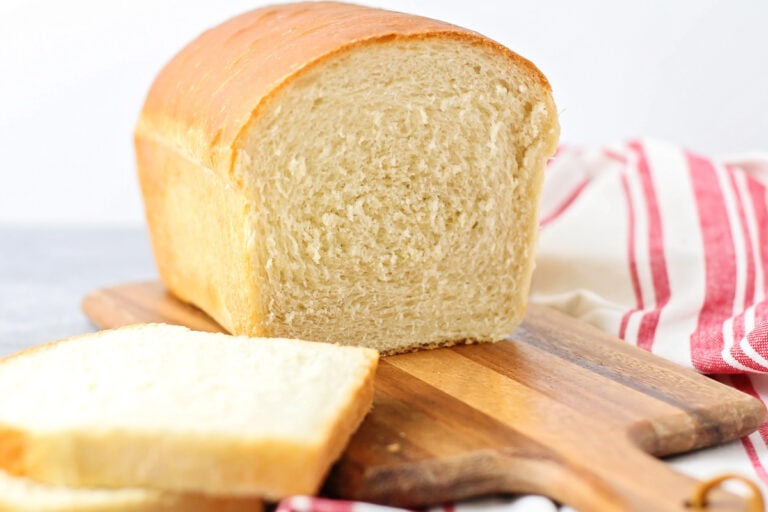

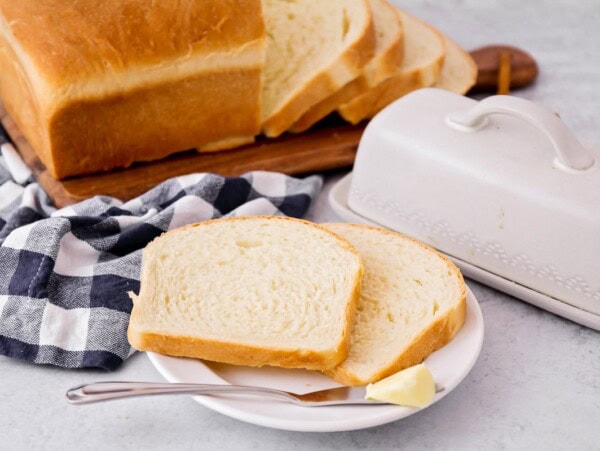
Homemade Bread is soft, fluffy, and made with simple pantry ingredients for an easy bread recipe we have made again and again. It makes two golden loaves that are great for sandwiches, toast, French toast, or simply sliced warm with butter.
We have tested classic bread recipes for years, and this is the one we keep coming back to. It takes only about 20 minutes of hands-on work, and the soft, slightly tacky dough gives you a tender loaf that slices beautifully once baked.
Use it for French Toast, Grilled Cheese, Homemade Croutons. For more family favorite breads, try our White Bread and Whole Wheat Bread.
Why You’ll Love It + Why It Works:
- Simple Pantry Ingredients. This classic bread uses basic ingredients you probably already keep on hand.
- Only 20 Minutes of Hands-On Work. Most of the recipe time is simply letting the dough rise and bake.
- Soft + Sliceable. Bread flour and proper kneading build enough gluten for loaves that rise well and hold together for sandwiches and toast.
- Dough Texture Is the Key. Adding the flour gradually keeps the dough soft and slightly tacky instead of dry and dense.
- Makes Two Loaves. Bake one for now and save the second for sandwiches, French toast, or the freezer.
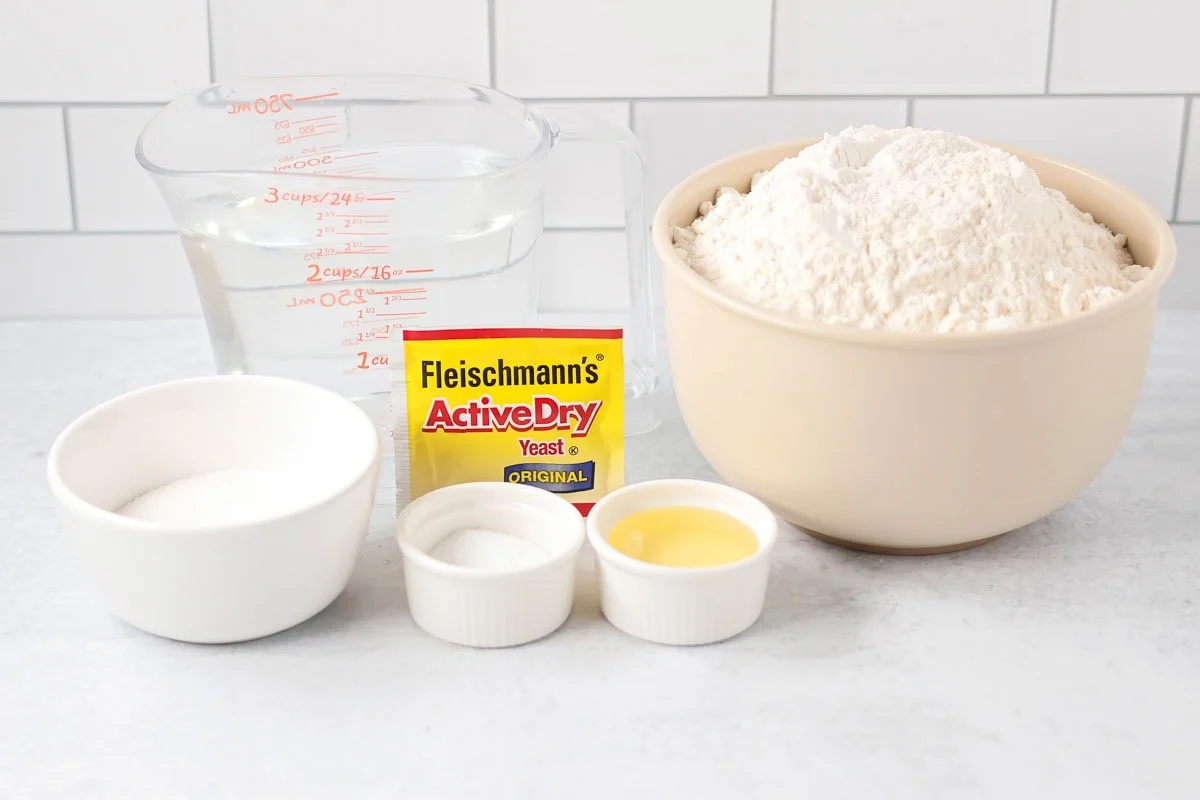
Homemade Bread Ingredients
- Active dry yeast (2¼ teaspoons, 1 packet): Leavens the dough so the loaves rise tall with a fine, even crumb. If it does not foam, start again with fresh yeast.
- Warm water (2¼ cups): Hydrates the flour and activates the yeast for a steady, strong rise. Water temp matters, aim for warm to the touch, about 105 to 110°F, to wake up the yeast without harming it.
- Sugar, plus 1 pinch (¼ cup, plus pinch): Feeds the yeast and adds a touch of sweetness that helps browning.
- Salt (1 tablespoon): Balances flavor and strengthens gluten for better structure.
- Vegetable oil (2 tablespoons): Keeps the crumb tender and the loaves soft for days.
- Bread flour (5½ to 6½ cups): Builds strong gluten for a soft, sturdy loaf that rises well and slices easily. Add the flour gradually and stop when the dough is soft, smooth, and slightly tacky. You may not need the full amount. All-purpose flour can also be used in the same amount.
- Butter for topping, optional: Brushed on the hot crust for a soft, glossy finish and buttery aroma. Other toppings include Homemade Strawberry Jam, Honey Butter, and Cinnamon Butter.
Make Your Own Bread Flour
For each 1 cup of bread flour needed, add 1 teaspoon vital wheat gluten to a 1-cup measuring cup, then fill the rest of the cup with all-purpose flour. Whisk or sift together before using.
How to Make Homemade Bread
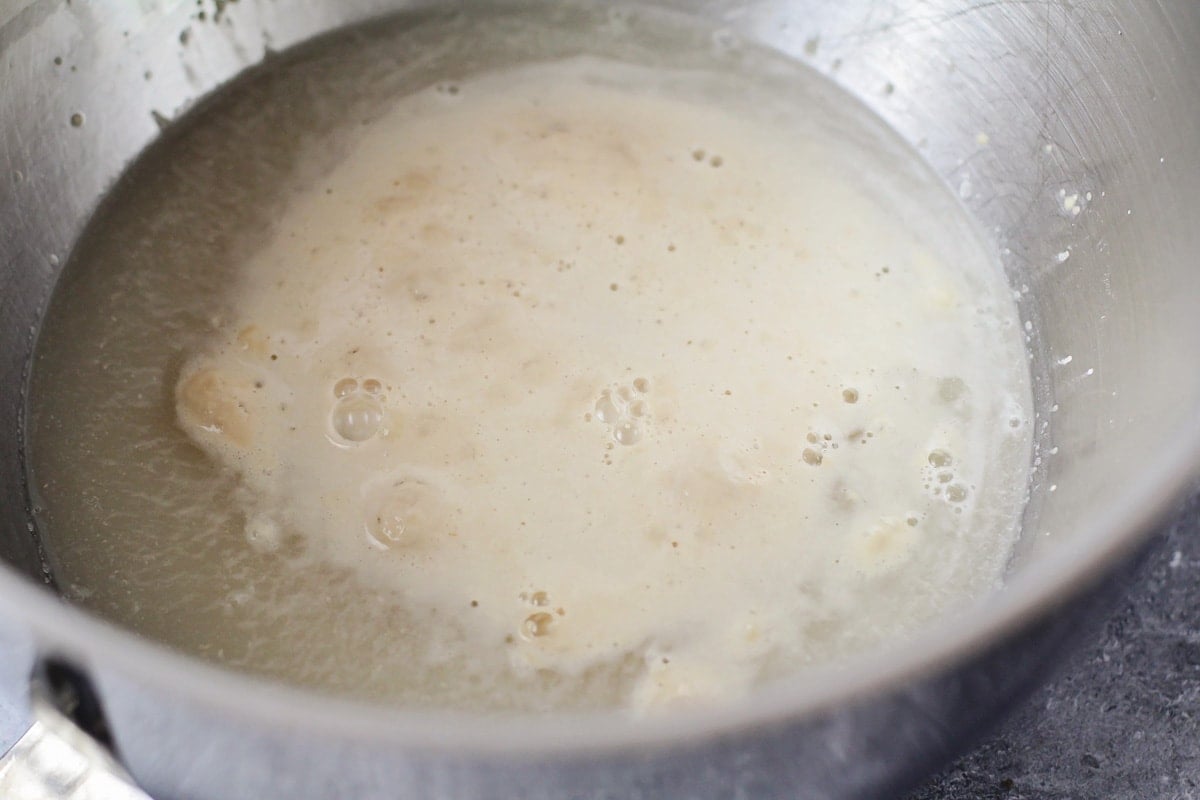
DOUGH. In a large bowl or the bowl of a stand mixer, dissolve the active dry yeast in the warm water with a pinch of sugar. Let it sit until bubbly and foamy. If the yeast does not foam, start again with fresh yeast.
Add the remaining sugar, salt, oil, and 4 cups bread flour. Mix with the dough hook until combined and smooth.
Gradually add the remaining flour, ½ cup at a time, just until a soft, smooth dough forms. The dough should begin to pull away from the sides of the bowl and feel slightly tacky when touched, but it should not be wet or overly sticky. You may not need the full amount of flour.
KNEAD. Knead with the dough hook on medium speed for 5 to 7 minutes, until the dough is smooth and elastic. When stretched gently, a small piece should become thin enough to let light through before tearing.
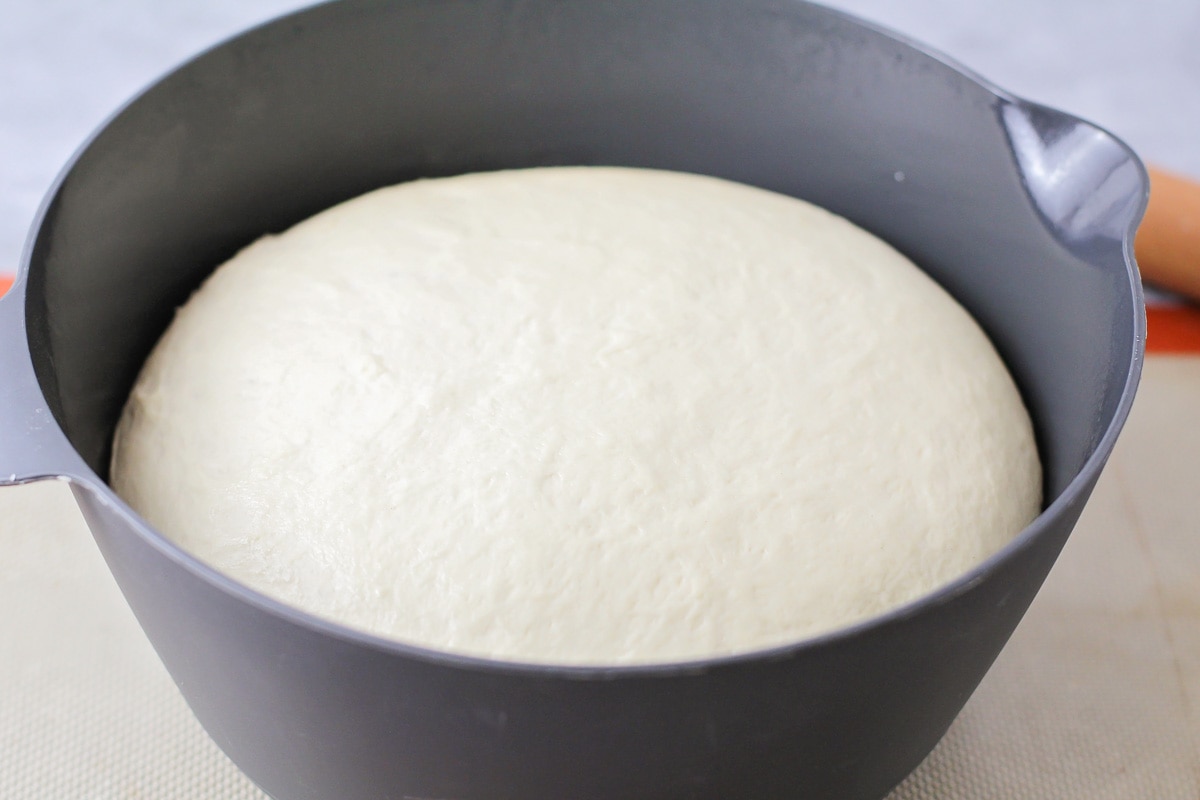
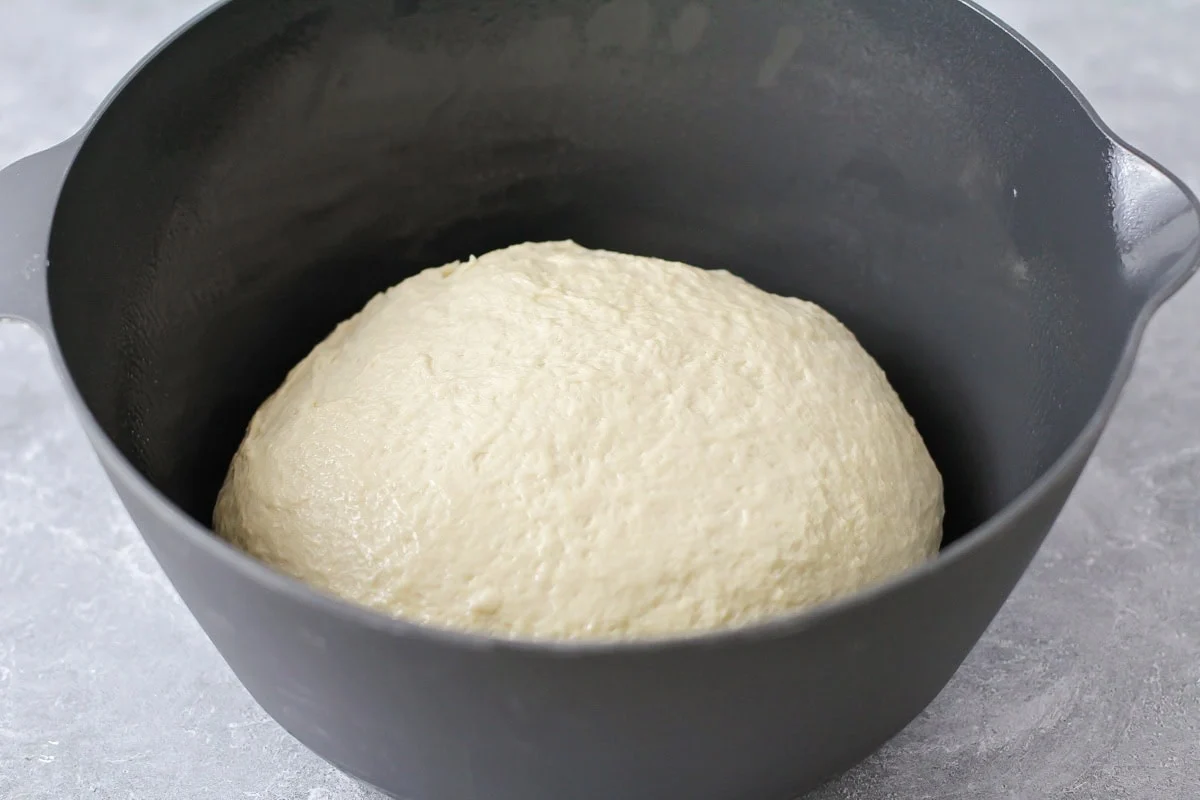
RISE. Lightly grease a large bowl with oil or cooking spray. Place the dough in the bowl and turn it once to coat. Cover and let rise in a warm place for about 1 hour, or until doubled in size. Use the size of the dough as your main guide since rise time can vary depending on the temperature of your kitchen.
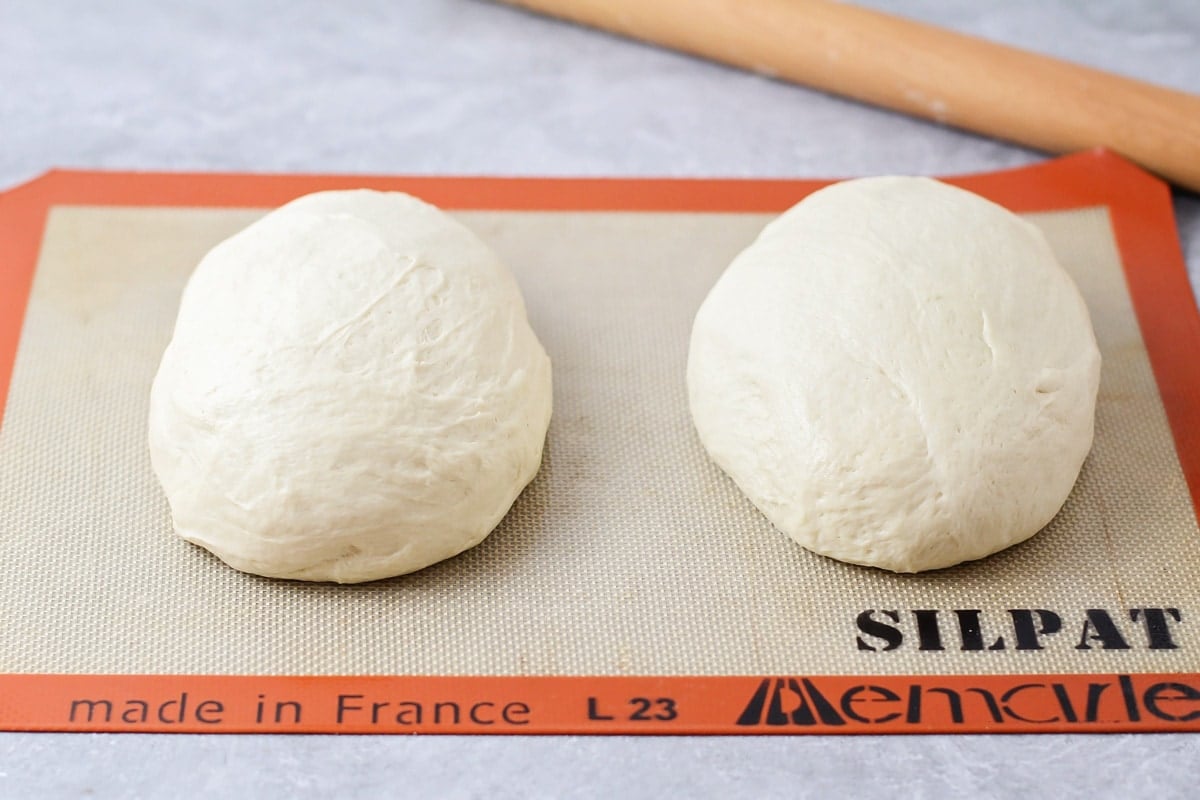
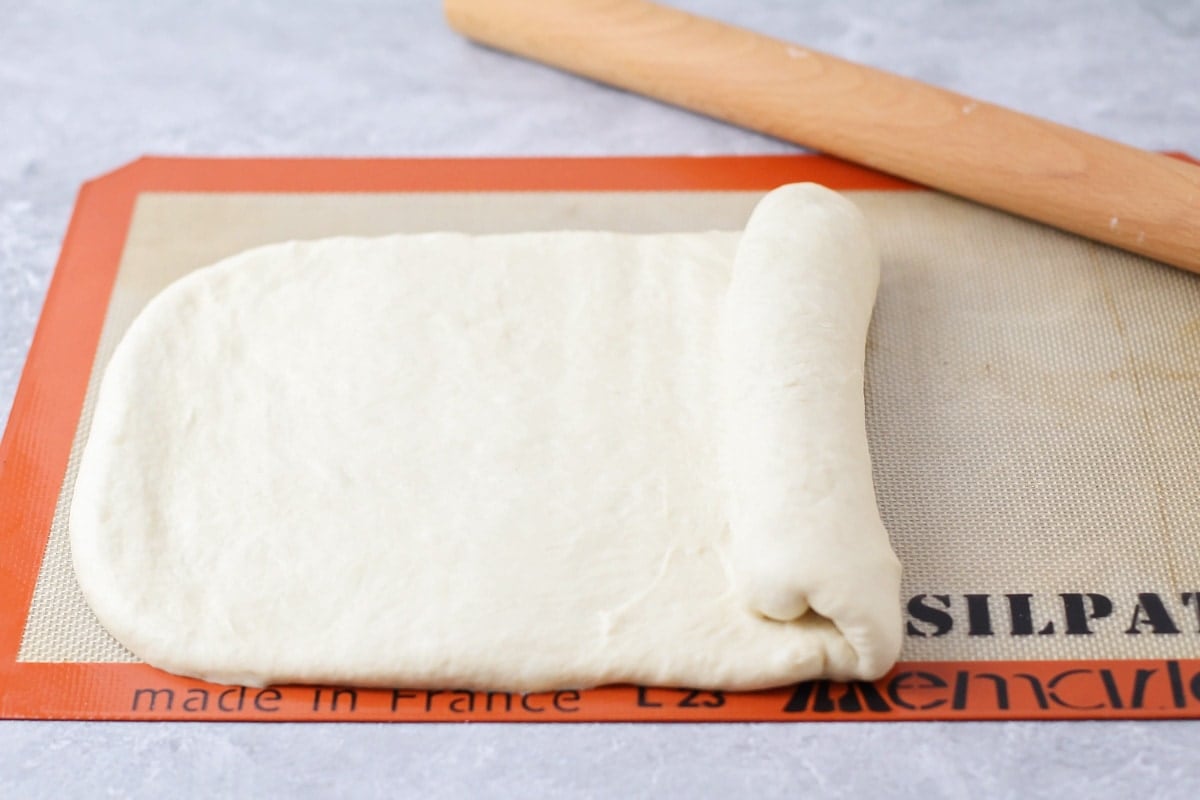
SHAPE. Gently punch down the risen dough and divide it in half. On a nonstick baking mat or lightly floured surface, roll each piece into a rectangle about 8 inches wide.
Starting at the short end, roll each rectangle tightly into a loaf. Pinch the seam closed and place each loaf seam side down in a lightly greased loaf pan.
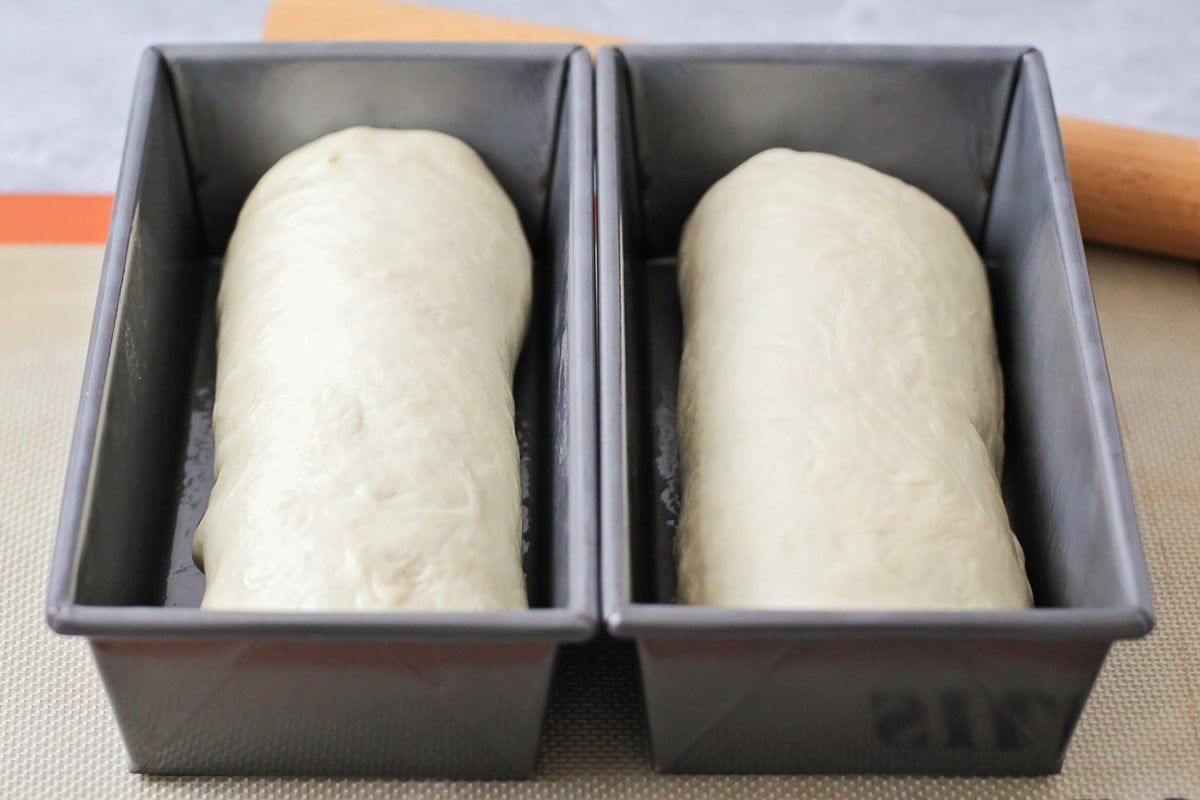
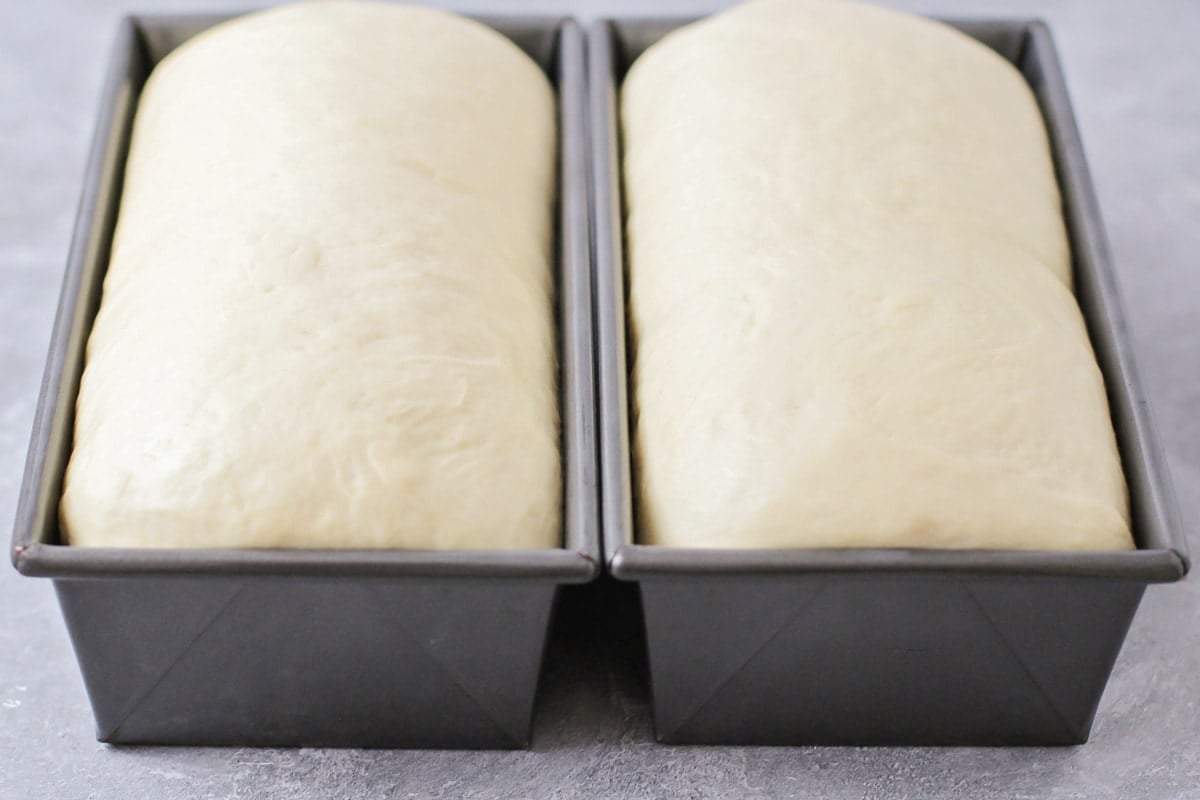
SECOND RISE. Cover the pans lightly with greased plastic wrap and let the dough rise until it reaches about ½ to 1 inch above the top of the pans. This will usually take about 1 hour, but use the height of the dough rather than the clock as your guide.
BAKE. Preheat the oven to 375°F. Bake for 30 to 35 minutes, until the loaves are golden brown and sound hollow when tapped. If using an instant-read thermometer, the center of the bread should be about 190 to 200°F.
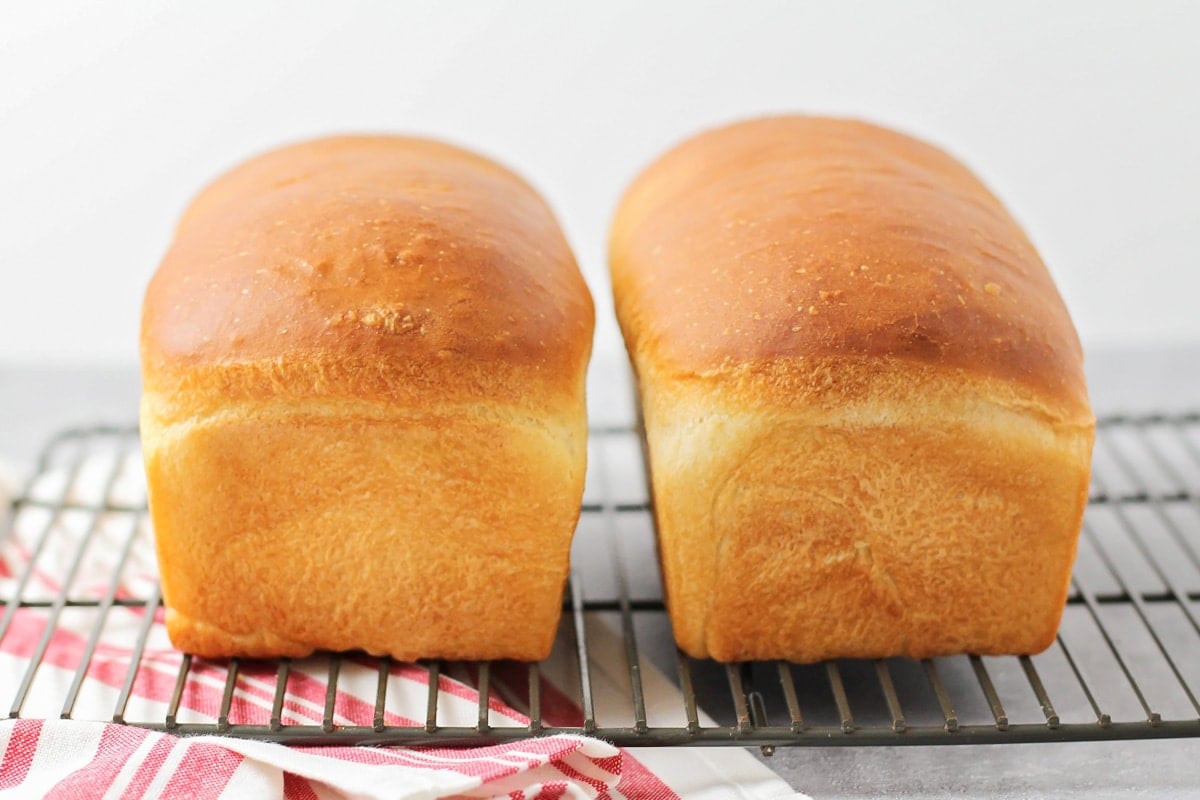
COOL. Brush the warm loaves with melted butter, if desired. Remove them from the pans and transfer to a wire rack to cool before slicing. The recipe makes 2 loaves.
Use your bread in some of our favorite recipes: French Toast, Grilled Cheese, French Toast Bake, Garlic Bread, Homemade Croutons.

Kristyn’s Recipe Tips
- Check the Yeast. The yeast mixture should become bubbly and foamy before you continue. If it does not, start again with fresh yeast.
- Add Flour Gradually. The amount you need can vary, so stop adding flour once the dough is soft, smooth, and slightly tacky.
- Do Not Make the Dough Too Dry. Too much flour is one of the easiest ways to end up with dense homemade bread.
- Knead Until Elastic. After 5 to 7 minutes, the dough should look smooth and stretch thin without tearing right away.
- Watch the Dough, Not Just the Clock. Rising times can change depending on the temperature of your kitchen, so look for the dough to double during the first rise and reach ½ to 1 inch above the pan during the second.
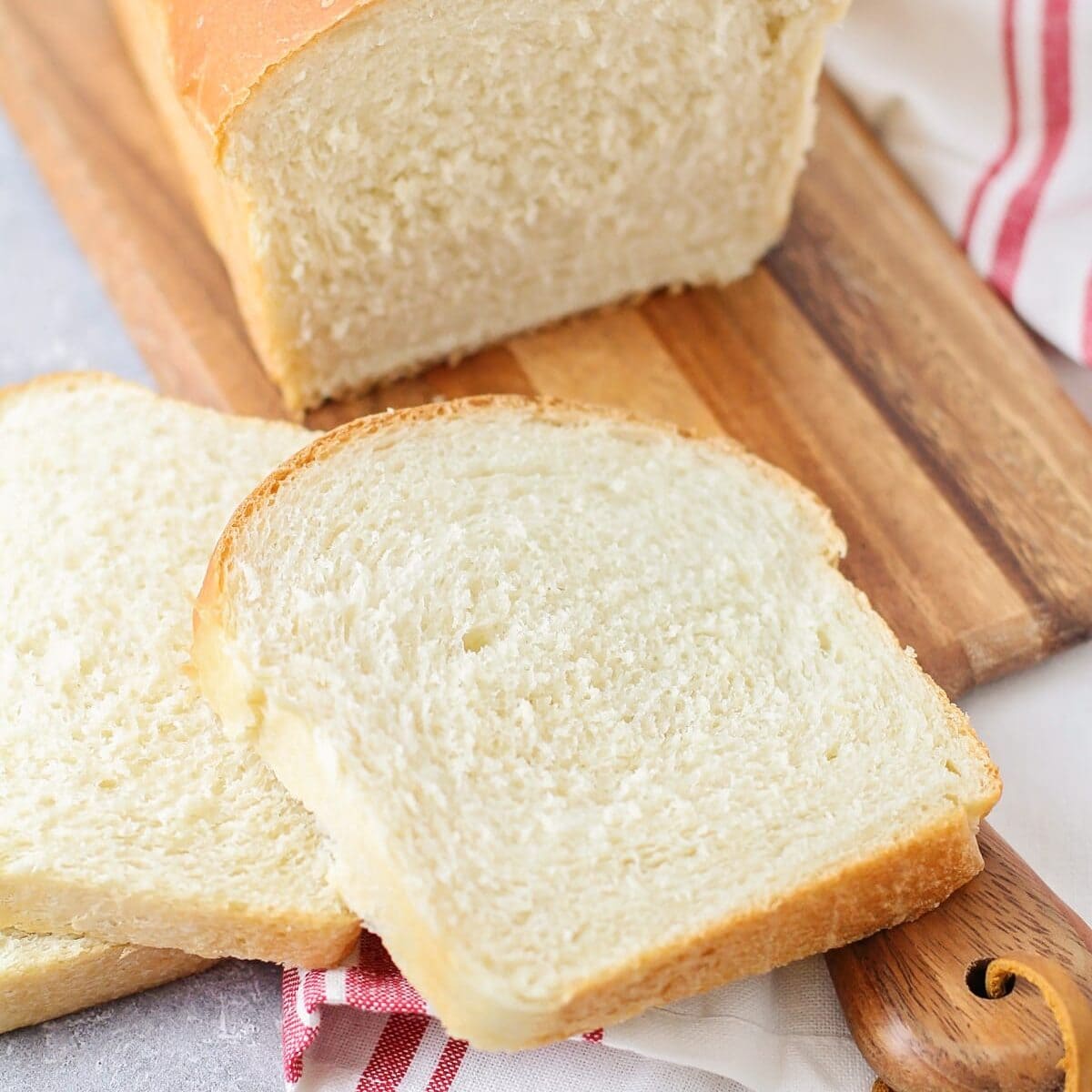
- Let It Cool Before Slicing. Cooling gives the crumb time to set so the slices stay soft instead of becoming gummy.
Easy Homemade Bread Recipe
Equipment
- loaf pans
Ingredients
- 2¼ teaspoons active dry yeast, (1 packet)
- 2¼ cups warm water
- ¼ cup sugar, plus 1 pinch
- 1 tablespoon salt
- 2 tablespoons vegetable oil
- 5½ – 6½ cups bread flour
- butter for topping, (optional)
Instructions
- In a large bowl or the bowl of a stand mixer, dissolve the active dry yeast in the warm water with a pinch of sugar. Let it sit until bubbly and foamy. If the yeast does not foam, start again with fresh yeast.
- Add the remaining sugar, salt, oil, and 4 cups bread flour. Mix with the dough hook until combined and smooth.
- Gradually add the remaining flour, ½ cup at a time, just until a soft, smooth dough forms. The dough should begin to pull away from the sides of the bowl and feel slightly tacky when touched, but it should not be wet or overly sticky. You may not need the full amount of flour.
- Knead with the dough hook on medium speed for 5 to 7 minutes, until the dough is smooth and elastic. When stretched gently, a small piece should become thin enough to let light through before tearing.
- Lightly grease a large bowl with oil or cooking spray. Place the dough in the bowl and turn it once to coat. Cover and let rise in a warm place for about 1 hour, or until doubled in size. Use the size of the dough as your main guide since rise time can vary depending on the temperature of your kitchen.
- Gently punch down the risen dough and divide it in half. On a nonstick baking mat or lightly floured surface, roll each piece into a rectangle about 8 inches wide. Starting at the short end, roll each rectangle tightly into a loaf. Pinch the seam closed and place each loaf seam side down in a lightly greased loaf pan.
- Cover the pans lightly with greased plastic wrap and let the dough rise until it reaches about ½ to 1 inch above the top of the pans. This will usually take about 1 hour, but use the height of the dough rather than the clock as your guide.
- Preheat the oven to 375°F. Bake for 30 to 35 minutes, until the loaves are golden brown and sound hollow when tapped. If using an instant-read thermometer, the center of the bread should be about 190 to 200°F.
- Brush the warm loaves with melted butter, if desired. Remove them from the pans and transfer to a wire rack to cool before slicing. The recipe makes 2 loaves.
Notes
- Check the Yeast. The yeast mixture should become bubbly and foamy before you continue. If it does not, start again with fresh yeast.
- Add Flour Gradually. The amount you need can vary, so stop adding flour once the dough is soft, smooth, and slightly tacky.
- Do Not Make the Dough Too Dry. Too much flour is one of the easiest ways to end up with dense homemade bread.
- Knead Until Elastic. After 5 to 7 minutes, the dough should look smooth and stretch thin without tearing right away.
- Watch the Dough, Not Just the Clock. Rising times can change depending on the temperature of your kitchen, so look for the dough to double during the first rise and reach ½ to 1 inch above the pan during the second.
- Let It Cool Before Slicing. Cooling gives the crumb time to set so the slices stay soft instead of becoming gummy.
- Use your bread in some of our favorite recipes: French Toast, Grilled Cheese, French Toast Bake, Garlic Bread, Homemade Croutons
- To bake – unwrap and place in a greased bread pan. Cover with an oiled piece of plastic wrap. Allow it to thaw for several hours and then rise until it is about doubled in size. Bake according to recipe directions.
Nutrition
Recipe FAQ
Yes. Use the same amount of instant yeast. Instant yeast does not need to be proofed in water first, so it can be mixed with the flour and other dry ingredients. If using active dry yeast, continue proofing it in the warm water as directed.
Dense bread is often caused by adding too much flour, not kneading the dough enough, or not allowing it to rise fully. Add the flour gradually and stop when the dough is soft and slightly tacky, knead until smooth and elastic, and use the visual rise cues in the recipe rather than relying only on time.
Place the covered dough in a warm, draft-free spot. A turned-off oven that has been warmed slightly can work well, but make sure it is only warm and not hot enough to damage the yeast.
After mixing and kneading the dough, cover it tightly and refrigerate before the first rise. Let it come back toward room temperature, then continue with the first rise, shaping, second rise, and baking.
After the first rise, shape the dough into loaves and freeze until firm. Wrap well and freeze. When ready to bake, place the frozen dough in greased loaf pans, cover, and let it thaw and rise until the dough reaches about ½ to 1 inch above the pans before baking as directed.
Let the bread cool completely, then store it in an airtight bag or container at room temperature for 2 to 3 days. Avoid refrigerating when possible since refrigeration can make bread stale faster
Yes. Let the loaves cool completely, wrap them well, and place them in freezer-safe bags. Freeze for up to 3 months. Thaw at room temperature before serving.
Yes, as long as your bread machine is large enough for the amount of dough. Add the ingredients in the order recommended by your machine manufacturer and use the basic white bread setting. Since this recipe makes 2 loaves, some bread machines may require making a half batch.
More Like This
Artisan Bread Recipes
Sourdough Bread
8 hrs 40 mins

Focaccia Bread
8 hrs 55 mins
Baguette Recipe
15 hrs 14 mins
Easy Italian Bread Recipe
2 hrs 40 mins
Bread Recipes
White Bread
3 hrs 15 mins

Whole Wheat Bread
3 hrs 15 mins
Easy Sandwich Bread Recipe
3 hrs 50 mins

No Knead Bread
3 hrs 14 mins
Collections




This recipe was first published December 2016.











Yes ma’am I like this recipe. I use it all the time. I’ve made cinnamon rolls with it. I’ve also done. I put onions, garlic, and sharp cheese in my bread Dough turned out great. I have big comets on it. Everybody loves the bread. I also do fry bread dough with it. And thank you so much! Very good!
I love hearing all the different ways you’ve used this dough!
I use this recipe to make some dinner rolls, loaf bread, Cinnamon rolls, also, I add cheese, garlic, Italian seasoning to some of my loaf bread very good . Thank you very much
I love hearing all the different ways you use this recipe!