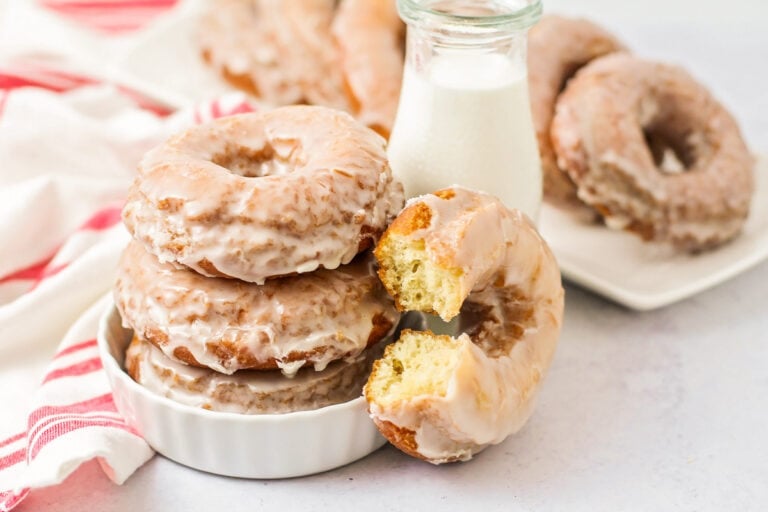

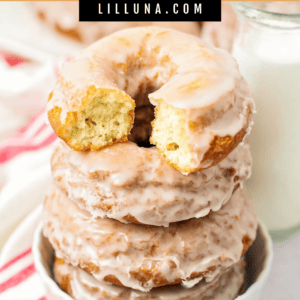
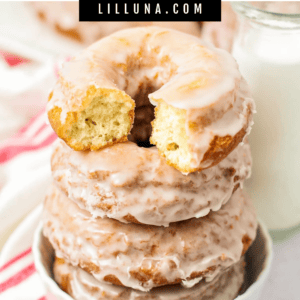
Old Fashioned Donuts are a classic no-yeast cake donut with a tender buttermilk center, golden edges, and plenty of cracks for the vanilla glaze to settle into. After making homemade donuts for years, we wanted a simple old fashioned version we could make at home, and this one has become a family favorite.
Unlike our classic yeast-raised Homemade Donuts, these use baking powder and baking soda for their lift, so there is no yeast or rising time. Buttermilk keeps the inside tender and gives the donuts that classic tangy flavor, while nutmeg and cinnamon add just the right amount of warm spice.
We love these for breakfast, brunch, or an easy homemade treat. For more donut favorites, try our Biscuit Donuts or Bonuts.
Why You’ll Love Them + Why They Work:
- No Yeast Needed. Baking powder and baking soda give these cake donuts their lift without waiting for yeast dough to rise.
- Classic Cake Donut Texture. The outside fries golden while the center stays soft and tender.
- Buttermilk Keeps Them Tender. Its acidity adds flavor and works with the leaveners to help the donuts puff as they fry.
- Warm Bakery Flavor. Nutmeg and cinnamon give the donuts that familiar old fashioned flavor.
- Cracks Hold the Glaze. The craggy surface catches plenty of simple vanilla glaze in every bite.
Old-Fashioned Donuts Ingredients
Dough
- Dough
- Eggs (4): Add richness and structure so the donuts hold their shape while still staying tender inside.
- Sugar (2 cups): Sweetens the dough and helps the donuts develop a golden color as they fry.
- Shortening (¼ cup), softened: Adds richness and helps keep the cake-style crumb soft and tender.
- Buttermilk (1½ cups): Adds moisture and a little tang while reacting with the baking soda to help the donuts rise.
- All-purpose flour (7 cups): Gives the donuts their structure. Spoon the flour into the measuring cup and level it off so you do not accidentally add too much and make the donuts dry.
- Baking powder (4 teaspoons): Gives the donuts lift and helps create their cake-like texture without yeast.
- Baking soda (2 teaspoons): Reacts with the buttermilk to help the donuts puff as they fry.
- Salt (1 teaspoon): Brings out the sweetness and warm spice flavors.
- Nutmeg (½ teaspoon): Adds that familiar bakery-style flavor you expect in an old fashioned cake donut.
- Cinnamon (½ teaspoon): Adds a little warmth and pairs well with the nutmeg and vanilla glaze.
- Vegetable oil: Fries the donuts until golden on the outside while the centers cook through. Canola or peanut oil can also be used. Add enough oil for the donuts to float freely while frying.
Glaze
- Butter, melted (4 tablespoons): Adds richness and helps give the glaze a smooth finish.
- Powdered sugar (3 cups): Creates the sweet base of the glaze and helps it set on the donuts.
- Vanilla extract (1 teaspoon): Adds classic vanilla flavor that pairs well with the buttermilk and warm spices.
- Half-and-half (4 to 6 tablespoons): Thins the glaze to the right consistency for dipping. Start with 4 tablespoons and add more a little at a time until it is smooth and about the consistency of honey.
- Optional toppings: Add cinnamon sugar, a dusting of powdered sugar, Chocolate Sauce, White Chocolate Sauce, or ganache to switch things up.
How to Make Old Fashioned Donuts
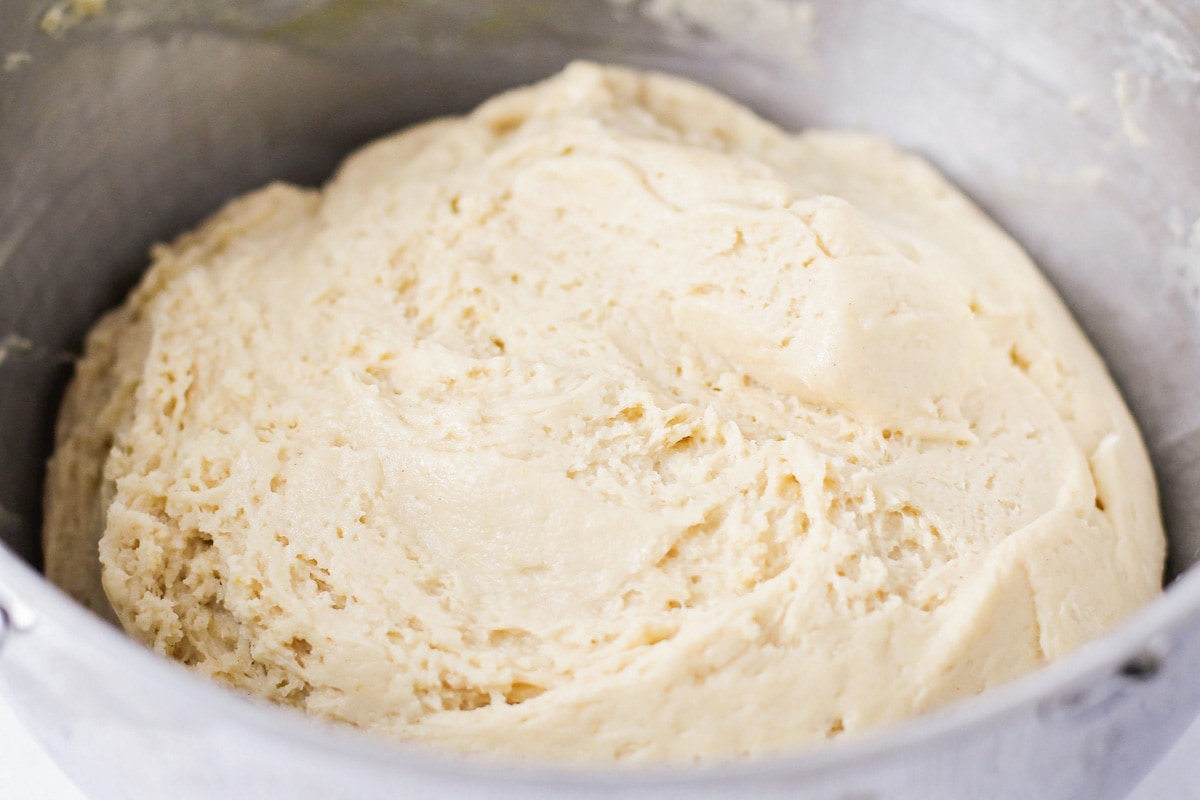

DOUGH. Beat the eggs in a large bowl. Mix in the sugar and softened shortening, then add the buttermilk. Stir in the flour, baking powder, baking soda, salt, nutmeg, and cinnamon just until a soft dough forms. Avoid overmixing.
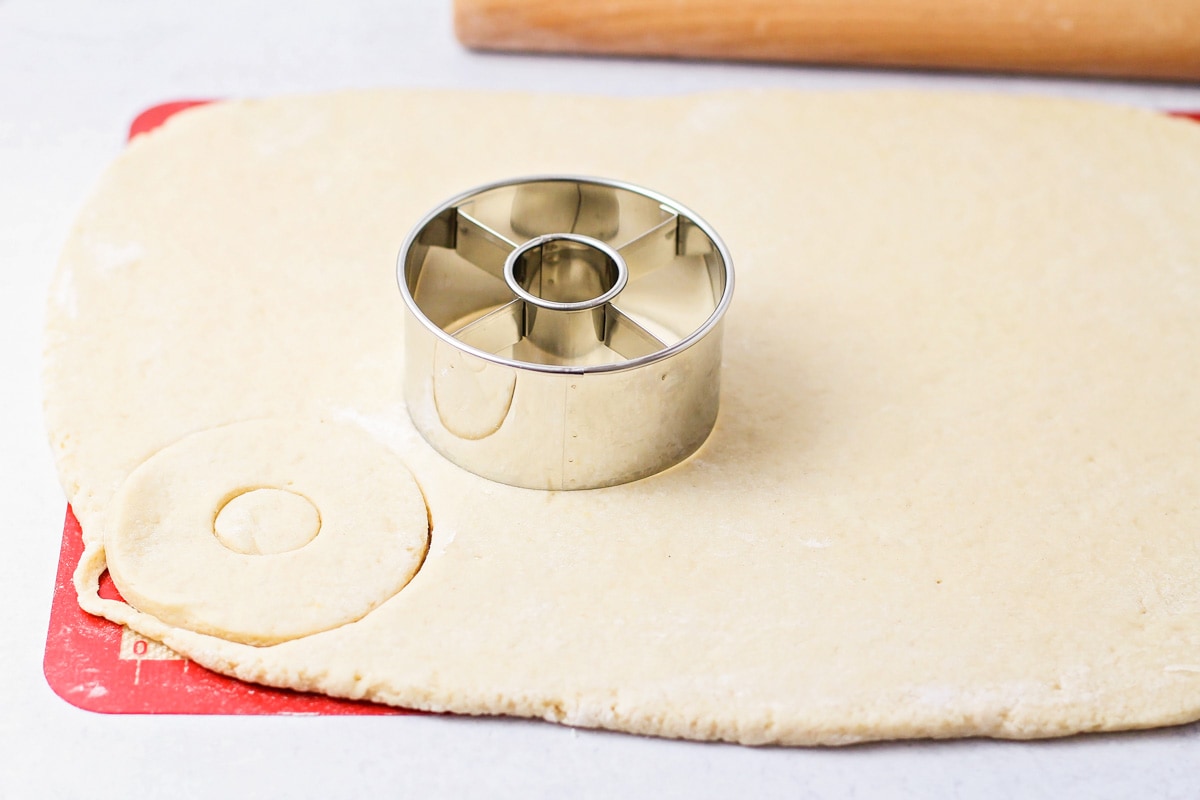

ROLL. Divide the dough in half and place each half on a lightly floured surface. Lightly flour the tops, then roll the dough to about ⅓ inch thick. Let the rolled dough rest for 20 minutes.
HEAT OIL. Pour enough vegetable oil into a heavy, high-sided pot for the donuts to float while frying. Heat the oil to the tested frying temperature and use a deep-fry thermometer to keep it as steady as possible.
CUT. Use a donut cutter or a large round cutter to cut the donuts, then use a smaller cutter for the centers. Brush off any excess flour before frying so it does not burn in the oil.
TEST. Fry one donut first to check the oil temperature, browning, and cooking time before adding the rest.


FRY. Fry 3 to 4 donuts at a time without crowding the pan. Turn as needed and fry until golden brown and cooked through. Let the oil return to the correct temperature between batches.
DRAIN. Transfer the donuts to a wire rack set over a baking sheet to drain and cool slightly. Fry the donut holes in the same way, reducing the cooking time as needed.
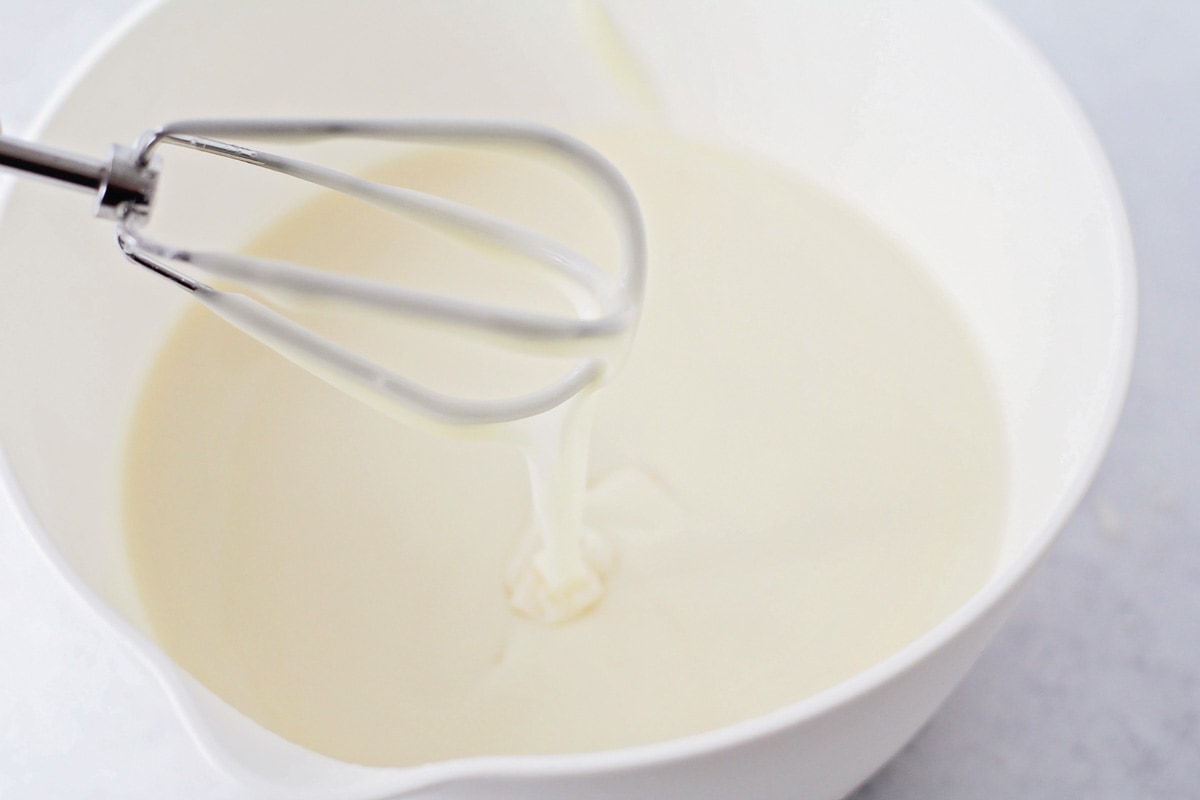

GLAZE. Whisk the melted butter, powdered sugar, vanilla, and 4 tablespoons half-and-half until smooth. Add more half-and-half a little at a time until the glaze is about the consistency of honey.
DIP. Dip the warm donuts into the glaze, then return them to the wire rack and let the glaze set before serving.
How to Set the Oil Temperature
A deep-fry thermometer is the easiest and most reliable way to keep the oil at the right temperature. Check it between batches and adjust the burner as needed because adding dough will temporarily lower the temperature.
If you do not have a thermometer, dip the end of a wooden spoon into the oil. Small, steady bubbles around the wood mean the oil is hot enough to fry. If the oil bubbles very aggressively or begins to smoke, reduce the heat.
For the most consistent donuts, we recommend using a thermometer whenever possible.


Kristyn’s Recipe Tips
- Measure Flour Carefully. Spoon flour into the measuring cup and level it so you do not accidentally add too much and make the donuts dry.
- Do Not Overmix. Mix only until the dough comes together to keep the inside tender.
- Watch the Oil Temperature. Use a thermometer and let the oil return to temperature between batches for even frying.
- Fry a Tester First. One test donut makes it easy to adjust the heat or cooking time before frying the entire batch.
- Do Not Crowd the Pot. Fry only a few at a time so the oil temperature does not drop too quickly.
- Glaze While Warm. Let the donuts cool slightly, then dip while still warm so the glaze sticks and settles into the cracks.
Old Fashioned Donuts Recipe

Ingredients
Dough
- 4 eggs
- 2 cups sugar
- ¼ cup shortening, soft
- 1½ cups buttermilk
- 7 cups all-purpose flour
- 4 teaspoons baking powder
- 2 teaspoons baking soda
- 1 teaspoon salt
- ½ teaspoon nutmeg
- ½ teaspoon cinnamon
- vegetable oil
Glaze
- 4 tablespoons butter, melted
- 3 cups powdered sugar
- 1 teaspoon vanilla extract
- 4-6 tablespoons half and half
Instructions
- DOUGH. Beat the eggs in a large bowl. Mix in the sugar and softened shortening, then add the buttermilk. Stir in the flour, baking powder, baking soda, salt, nutmeg, and cinnamon just until a soft dough forms. Avoid over-mixing.
- Divide the dough in half and place each half on a lightly floured surface. Lightly flour the tops, then roll the dough to about ⅓ inch thick. Let the rolled dough rest for 20 minutes.
- Pour enough vegetable oil into a heavy, high-sided pot for the donuts to float while frying. Heat the oil to the tested frying temperature and use a deep-fry thermometer to keep it as steady as possible.
- Use a donut cutter or a large round cutter to cut the donuts, then use a smaller cutter for the centers. Brush off any excess flour before frying so it does not burn in the oil.
- Fry one donut first to check the oil temperature, browning, and cooking time before adding the rest. Fry 3 to 4 donuts at a time without crowding the pan. Turn as needed and fry until golden brown and cooked through. Let the oil return to the correct temperature between batches.
- Transfer the donuts to a wire rack set over a baking sheet to drain and cool slightly. Fry the donut holes in the same way, reducing the cooking time as needed.
- Whisk the melted butter, powdered sugar, vanilla, and 4 tablespoons half-and-half until smooth. Add more half-and-half a little at a time until the glaze is about the consistency of honey.
- Dip the warm donuts into the glaze, then return them to the wire rack and let the glaze set before serving.
Notes
Nutrition
Recipe FAQ
Old Fashioned Donuts are cake-style donuts that use baking powder and baking soda instead of yeast. They have a tender, slightly denser center and a craggy outside that holds plenty of glaze.
The oil is probably too hot. Lower the heat and check the temperature with a deep-fry thermometer before frying the next batch.
Too much flour or overmixing can make cake donuts dry. Measure the flour carefully and mix the dough only until everything is combined.
Because this dough contains baking soda and buttermilk, use the make-ahead time confirmed during testing. Keep the dough tightly covered in the refrigerator, then roll, cut, and fry according to the recipe.
This recipe was developed for frying, which gives the donuts their golden exterior and classic texture. For baked donuts, we recommend using a recipe specifically developed for the oven.
These donuts are best the day they are made. Store completely cooled leftovers in an airtight container at room temperature for 1 to 2 days.
Yes. Freeze cooled donuts in an airtight freezer-safe container or bag for up to 3 months. For the best texture, freeze them without glaze when possible and glaze after thawing and reheating.
More Like This
Donut Recipes
Homemade Donut Recipe
3 hrs 50 mins
Homemade Biscuit Donuts
15 mins
Mini Donut Muffins
23 mins
Bonuts
25 mins
Collections



This recipe was first shared January, 2021.











These turned out very heavy and dry, yet we followed the recipe exactly. Any tips?
The recipe does yield more of a “cake-like” donut than a traditional glazed donut. But perhaps the dough needed to rest a bit longer to let the dough rise a bit more. We also have a donut recipe that is more of a traditional glazed donut if that interests you at all. 🙂 https://lilluna.com/homemade-donuts-recipe/
So many pop-ups on your page. I can’t even see the damn recipe. Thank you
I’m so sorry about that. I will look into seeing what I can do to make sure the pop-ups don’t block the content of the website. Thanks so much for letting me know!
If you are viewing through Pinterest that may be the problem. Click on the options to “view in browser” to go to the Internet. I can’t view anything in Pinterest anymore. It’s awful.
Roll to 1/3″ thick? Sounds very very thin, most recipes are rolled 1/2″ or more thick. Please confirm that is the correct thickness.
Yes, that is the correct thickness for this recipe. 🙂
Can’t wait to make these!!
Awesome! Let me know how they turn out. 🙂
After making the dough, can it be refrigerated over night and used the next day? I was thinking it would just need to be brought to room temp, tcut and sit for 20?
Yes – just bring it to room temperature in the morning and you should be good to go!
Can they be baked instead of fried in deep oil?
I have not tried with this exact recipe, but with another recipe I have…https://lilluna.com/homemade-donuts-recipe/, there is a bake version..https://lilluna.com/homemade-donuts-recipe/.
If you do not have buttermilk, can you use regular milk and vinegar to subsitute??
Yes, for sure 🙂 Enjoy!!
How much Dutch chocolate powder you add if split the mix down for half chocolate and half plain?
I have not tried making these chocolate yet, so I don’t know the measurement. I would have to play around with it. I would start with maybe 1/3 cup at a time, until it was right.
I Made these using a homemade maple laze and they turned out great. I will definitely be making them again.
Perfect!! Thank you for sharing that!
You have missed a step the step on how you turn the half dough into the donuts? You divided into 2 then what? You roll it tthe whole dough ouece into a 3/4 inch circle?
I will work on fixing that. Yes, roll it out & cut out donuts & let sit for 20 minutes.